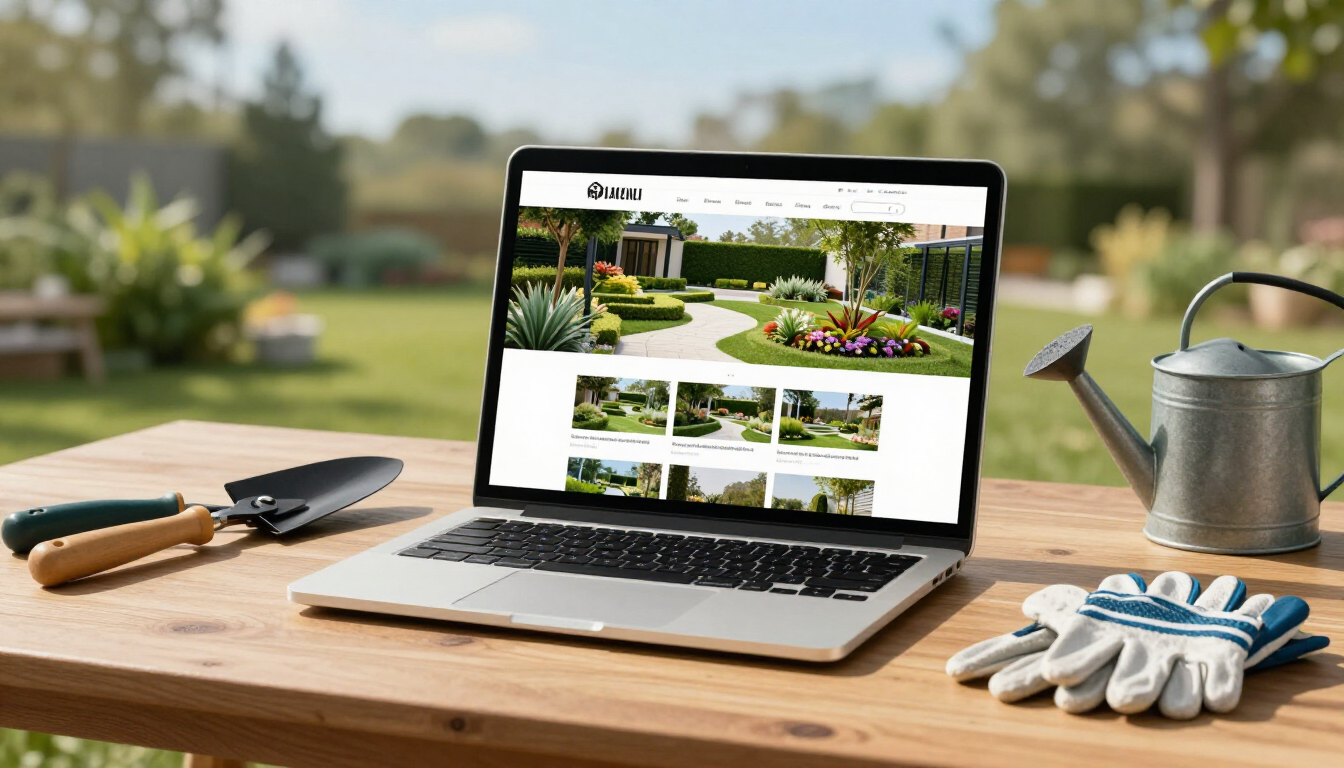
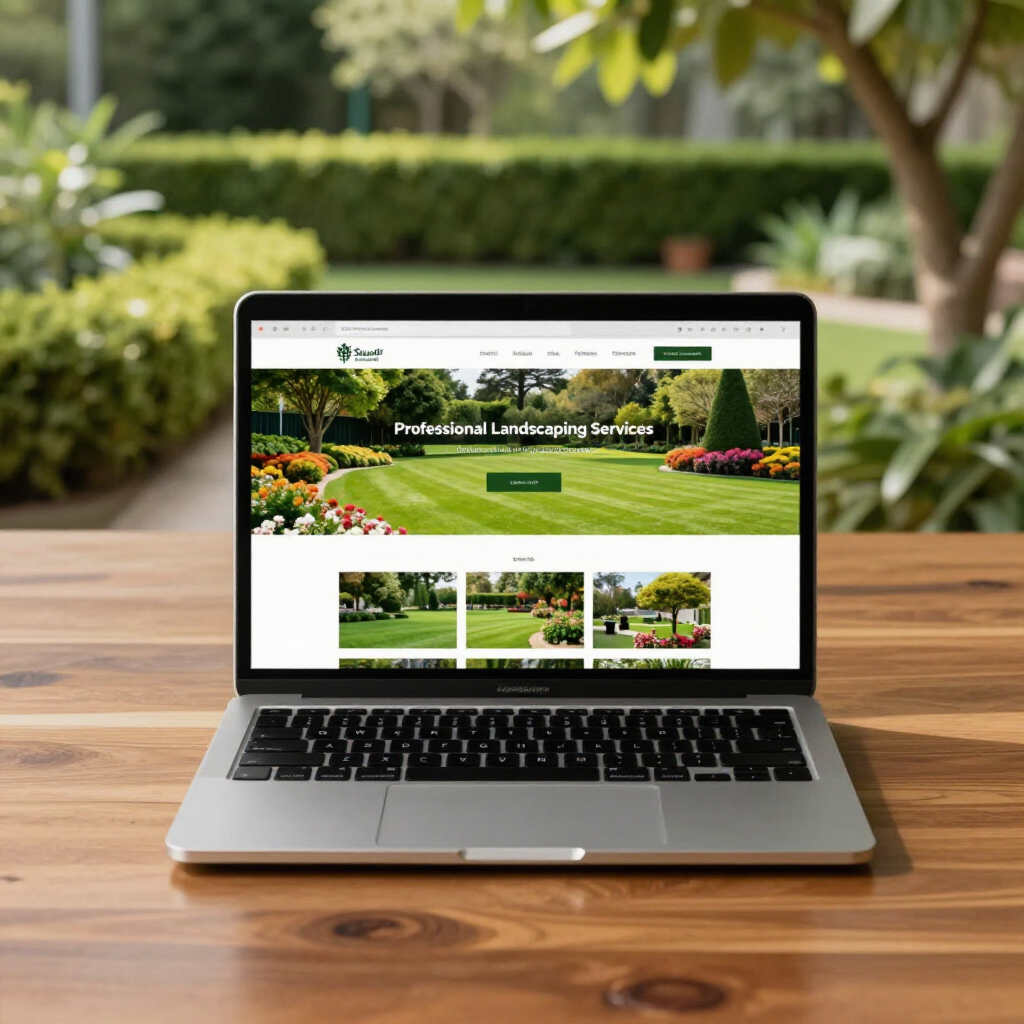
How to Improve Landscaping SEO: 7 Tips for 2026
Improving SEO for landscaping companies involves optimizing your Google Business Profile, building location-specific service pages, and maintaining a fast, mobile-friendly website. By focusing on local keywords and high-quality customer reviews, you can increase your visibility on search engines, helping more local homeowners find and hire your landscaping team.
How do I make my landscaping business show up on Google?
To make your landscaping business visible on Google, you need to understand that there isn't just one single "search result." When a homeowner in your town searches for "landscapers near me," Google typically shows two main sections: the Local Map Pack and the organic search results. The Map Pack is that box at the top of the page featuring a map and three prominent business listings. To appear there, you must have a verified Google Business Profile.
Organic results, on the other hand, are the traditional blue links that appear below the map. To show up here, your actual website needs to be relevant and authoritative. This means your site must clearly communicate what you do, where you do it, and why you are a trusted professional. Google's primary goal is to provide the most helpful answer to a user's query. If your website is buried on page five, it usually means Google doesn't yet see your site as the most relevant answer for that specific search.
Visibility doesn't happen overnight. It is the result of consistent effort across several different areas of your online presence. You aren't just trying to "trick" a computer program; you are trying to demonstrate to Google—and your potential clients—that you are a legitimate, active, and reliable business in the local community. By focusing on the basics of SEO for landscaping companies, you can slowly but surely climb the rankings and start receiving more quote requests without paying for expensive ads.
Optimizing Your Google Business Profile for Local Reach
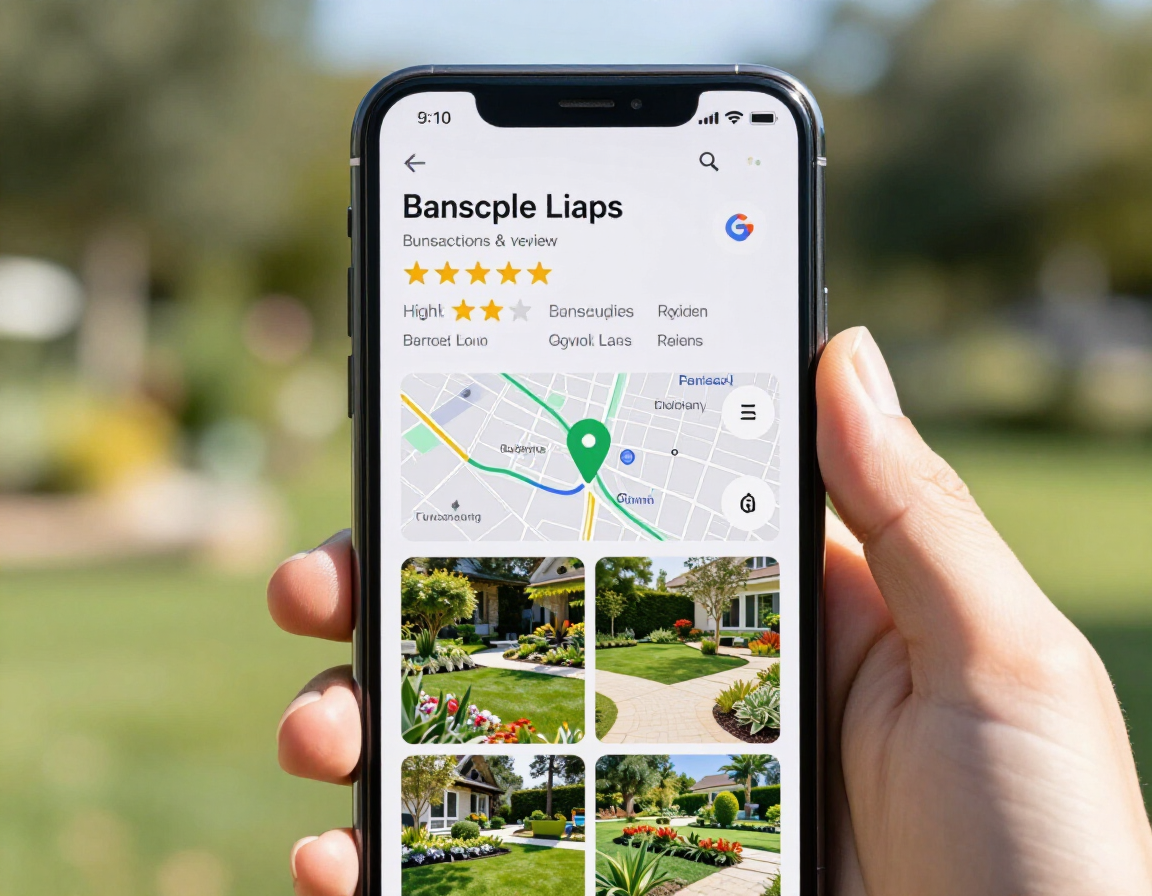
Your Google Business Profile (GBP) is often the first thing a potential customer sees. If you haven't claimed your profile yet, that is your very first step. Once claimed, you need to fill out every single section. Don't just put your business name and phone number; include your full address, your service area, and a detailed description of what makes your landscaping company unique. Use natural language and mention the specific towns or neighborhoods you serve.
Images are a massive part of a successful GBP. Landscaping is a highly visual industry, and homeowners want to see the quality of your work before they call you for a quote. Regularly uploading high-resolution photos of completed projects—like a freshly mown lawn, a new patio installation, or a clean spring cleanup—tells both Google and the customer that you are active. Aim to add at least one or two new photos every week.
Why are individual service pages necessary for SEO?
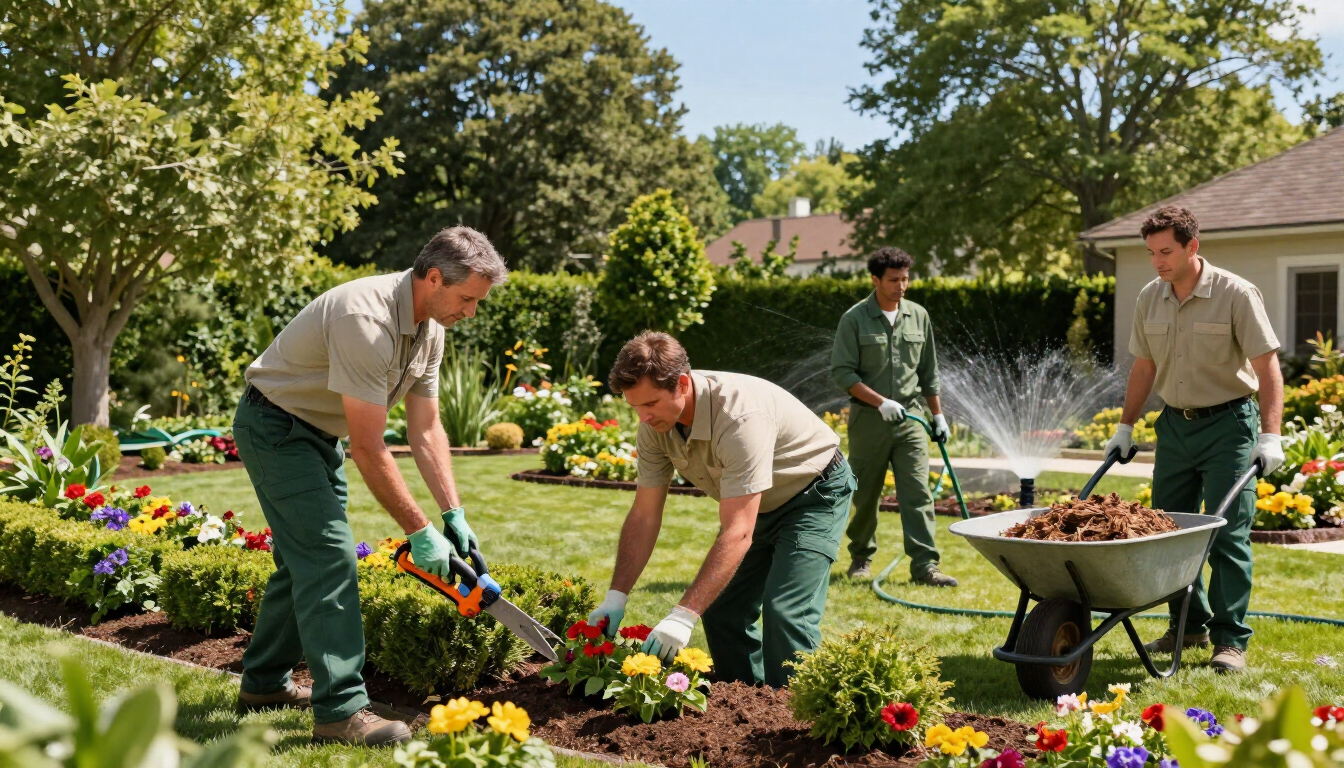
Many landscaping websites make the mistake of listing all their services on one single page. While this might seem efficient, it is actually a major hurdle for your SEO for landscaping companies. If you have one page titled "Our Services" that mentions lawn mowing, irrigation, hardscaping, and snow removal, Google might struggle to decide which of those topics is the most important.
When someone searches specifically for "retaining wall builder [City Name]," Google wants to find a page that is dedicated entirely to retaining walls. By creating individual services pages, you give Google a specific destination to send those users. Each page should include:
- A clear, descriptive heading using the service name.
- At least 300-500 words of helpful content about that specific service.
- Local keywords that mention the specific areas you serve.
- A clear call to action (like "Get a Free Quote").
- Photos of your own work related to that specific service.
When you build your site this way, you are essentially casting multiple nets into the sea. One net catches people looking for lawn care, another catches people looking for landscape design, and another catches those looking for seasonal cleanups. This targeted approach is far more effective than trying to catch everyone with a single, generic page.
Choosing the Right Local Landscaping Keywords
Keywords are the phrases people type into the search bar. For a landscaping business, these are almost always "intent-based" and "location-based." Someone searching for "how to grow grass" is looking for information, but someone searching for "professional lawn care services in [Your City]" is looking to hire. You want to rank for the latter.
To improve your visibility, you should sprinkle these keywords naturally throughout your website's text, headings, and meta descriptions. Avoid "keyword stuffing," which is the practice of shoving as many keywords as possible into a paragraph until it sounds like a robot wrote it. Instead, focus on how a real human speaks. If you are a landscaper in Springfield, use phrases like "Springfield lawn maintenance" or "best landscapers in Springfield IL."
Common keyword variants for the landscaping industry include:
- Landscaping services near me
- Residential landscape design [City]
- Affordable lawn mowing [City]
- Hardscaping contractors [City]
- Commercial landscaping [City]
By including these variations, you help Google understand the full breadth of your expertise and the geographic area you cover. This is a foundational step in any successful SEO strategy.
How does website speed affect your search ranking?
In 2026, nobody has the patience to wait for a slow website to load. If a homeowner clicks on your link and the page takes more than three seconds to appear, they will likely hit the "back" button and click on your competitor instead. This is called a "bounce," and Google tracks it. If too many people bounce away from your site, Google will assume your page isn't helpful and will lower your ranking.
Website speed is a technical part of SEO, but it has a huge impact on your bottom line. At Lawn Lead, we focus on building conversion-focused websites that load instantly. This involves optimizing images so they aren't massive files, using clean code, and choosing a high-quality hosting provider. When your site is fast, users stay longer, look at more pages, and are more likely to fill out a quote request form. You can see examples of fast, high-performing sites in our work and results section.
Why mobile-friendly design is a non-negotiable
Most homeowners realize they need a landscaper while they are standing in their yard looking at a problem, or while they are sitting on their couch scrolling through their phones. If your website looks great on a desktop computer but is impossible to read on a smartphone, you are losing business. Mobile-friendly design—often called responsive design—means your website automatically adjusts its layout to fit whatever screen size the visitor is using.
Google now uses "mobile-first indexing," which means they primarily look at the mobile version of your site to determine your ranking. If your buttons are too small to click or your text is too tiny to read on a phone, your SEO will suffer. A truly mobile-optimized site makes it easy for a customer to find your phone number and tap it to call you immediately. Convenience is a key factor in turning a website visitor into a paying customer.
Do customer reviews actually improve your visibility?
Yes, customer reviews are a massive ranking factor for local SEO. Google wants to recommend businesses that have a proven track record of making customers happy. A business with fifty 5-star reviews is almost always going to outrank a business with zero reviews or a 2-star rating.
Reviews provide "social proof," but they also provide Google with more keywords. When a customer writes, "The team at [Your Company] did a great job with my flower bed installation in [City]," they are providing Google with fresh, relevant content that confirms you do what you say you do in the location you say you do it. Make it a habit to ask every satisfied customer for a review on your Google Business Profile as soon as the job is finished.
Maintaining a Fresh and Trustworthy Online Presence
One of the most overlooked parts of SEO for landscaping companies is consistency. Google likes websites that are regularly updated. This doesn't mean you have to write a new blog post every single day, but it does mean you shouldn't let your site sit untouched for three years. Updating your portfolio, adding new customer testimonials, or posting a seasonal tip about lawn care shows Google that your business is still active and thriving.
A strong online presence is built on trust. This means your NAP (Name, Address, Phone Number) must be identical across the entire internet. If your website says your office is on "Main St" but your Facebook page says "Main Street," it can cause slight confusion for search engine algorithms. Small details matter when you are trying to beat out local competition for those top three spots on the map.
Why you should avoid shortcuts in SEO
You might hear about "shortcuts" or "hacks" to get to the top of Google instantly. These often involve buying fake reviews, hiding invisible text on your pages, or using automated software to generate hundreds of low-quality links. In the long run, these tactics are dangerous. Google is incredibly smart and frequently updates its algorithm to penalize sites that try to cheat the system. If you get caught, your website could be removed from search results entirely.
Real SEO is about building a better business. It’s about making it easier for your customers to find the information they need and proving that you are a local expert. When you focus on providing a great user experience and clear, honest information, the rankings will follow. It takes more time and effort than a shortcut, but the results are permanent and far more profitable.
Summary of How to Improve Your Visibility
To improve your landscaping company's visibility on Google, you must prioritize a user-friendly website and a robust local presence. Focus on building dedicated service pages, optimizing your Google Business Profile with fresh photos, and encouraging satisfied clients to leave reviews. Ensure your site is fast and mobile-responsive to provide the best experience for potential customers. By sticking to these fundamental principles and avoiding risky shortcuts, you will build a trustworthy brand that ranks higher and attracts more qualified leads.
Key Takeaways:
- Claim and fully complete your Google Business Profile with photos and accurate info.
- Create separate pages for every major service you offer to target specific keywords.
- Optimize for mobile users and ensure your website loads in under three seconds.
- Collect authentic 5-star reviews to build local authority and search trust.
- Keep your content updated and avoid "black-hat" SEO shortcuts that can lead to penalties.
Ready to get more quote requests with a professional, high-ranking website? Get a Free Quote from Alex at Lawn Lead today and let's start growing your landscaping business together.
Recent Posts